Book of Grotesques, for orchestra (2025)
Duration: 16:00 minutes
Instrumentation: piccolo, 2 flutes, 3 oboes , 3 B-flat clarinets (3rd doubles bass clarinet), 3 bassoons, 4 horns, 3 C trumpets, 2 trombones, bass trombone, tuba, timpani, percussion (3 players), harp, piano, and strings (optional offstage brass ensemble)
Premiere: May 3, 2026 by Texas State University Symphony Orchestra, conducted by Jacob Harrison at Evans Auditorium, Texas State University, San Marcos, TX
Notes:
Book of Grotesques is a suite of pieces responding to four images by Dutch and German artists working in the late medieval/early modern period. They created these works at a time of immense upheaval as society was fundamentally challenged by disaster (plagues, economic crises, and wars) and by progress (in science, art, and global trade). Perhaps reflecting their own chaotic society, these artists made images that remain strikingly bizarre and eccentric centuries later.
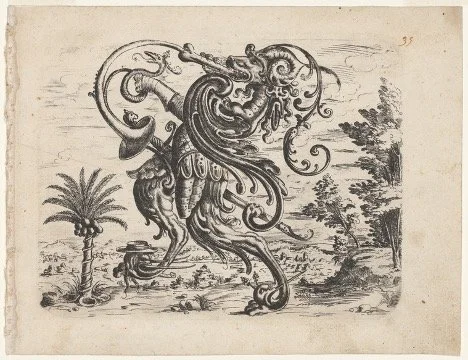
The first movement, Trumpeting Grotesque, is based on an image from Christoph Jamnitzer’s 1616 Neuw Grottessken Buch (New Book of Grotesques), which is a collection of fanciful ornamental designs, not for anything in particular, but simply created to stimulate the artistic mind. The figure depicted in Trumpeting Grotesque is a weird half-dog, half-griffon, stomping through an exotic landscape and blasting on a curved trumpet. The creature, its trumpet, and the sword strapped to its side, are all adorned with extravagant curlicues, but otherwise it is hard to imagine this figure as the basis for any ornamental design. My musical response is a short introductory movement depicting the ferocious trumpeting and galloping of this unlikely creature.
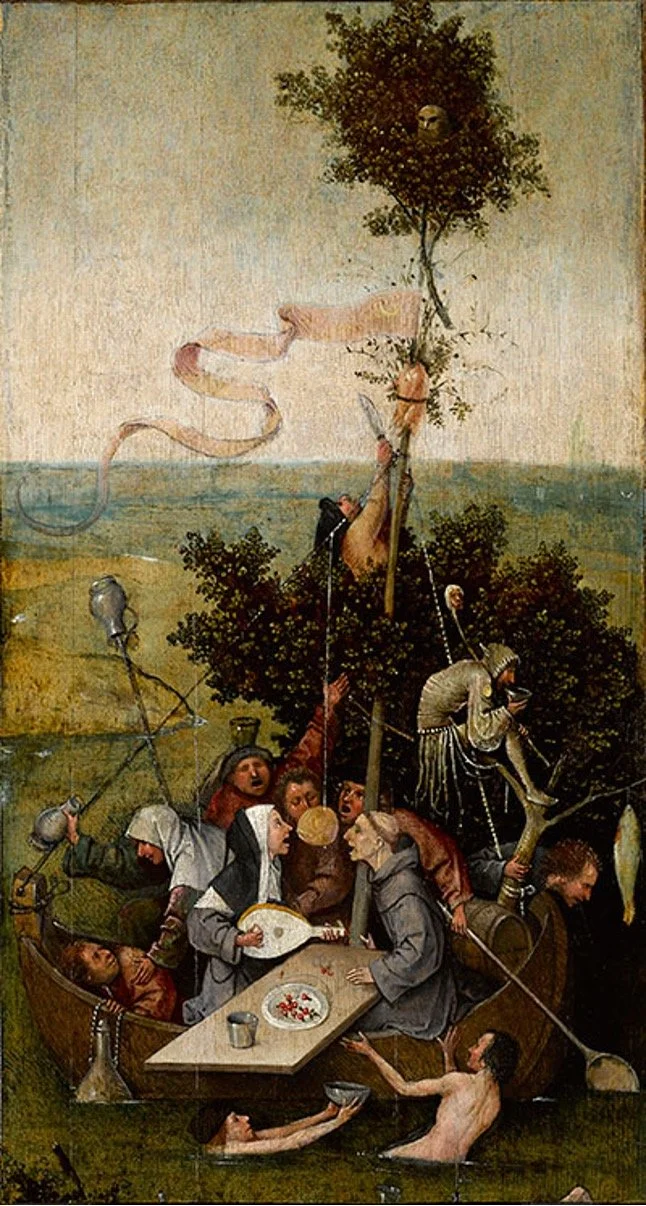
The second movement, The Ship of Fools, follows without pause and responds to a painting by Hieronymus Bosch (c. 1490s). In the painting, a nun (playing the lute), a friar, and various merry makers, are traveling in a rudderless ship with an enormous spoon as an oar. There is an owl perched in the mast (which is also a tree) and a fool wearing an ass-eared hat and holding a marotte seems to be acting as captain. This painting is dense with symbolism that suggests a society that has lost its way. In the music, I portrayed the aimless ship with a wandering bass line, over which the lute (played by the harp) and owl (played by a slide whistle) float uneasily. The fool is represented in the flutes and tambourine, with the tune Entre du fol (Entrance of the Fool), which I quoted from Tielman Susato’s collection of popular dance tunes, known as Danserye (1551). I imagined such a foolish ship would eventually crash and capsize, and this is depicted near the end of the movement.
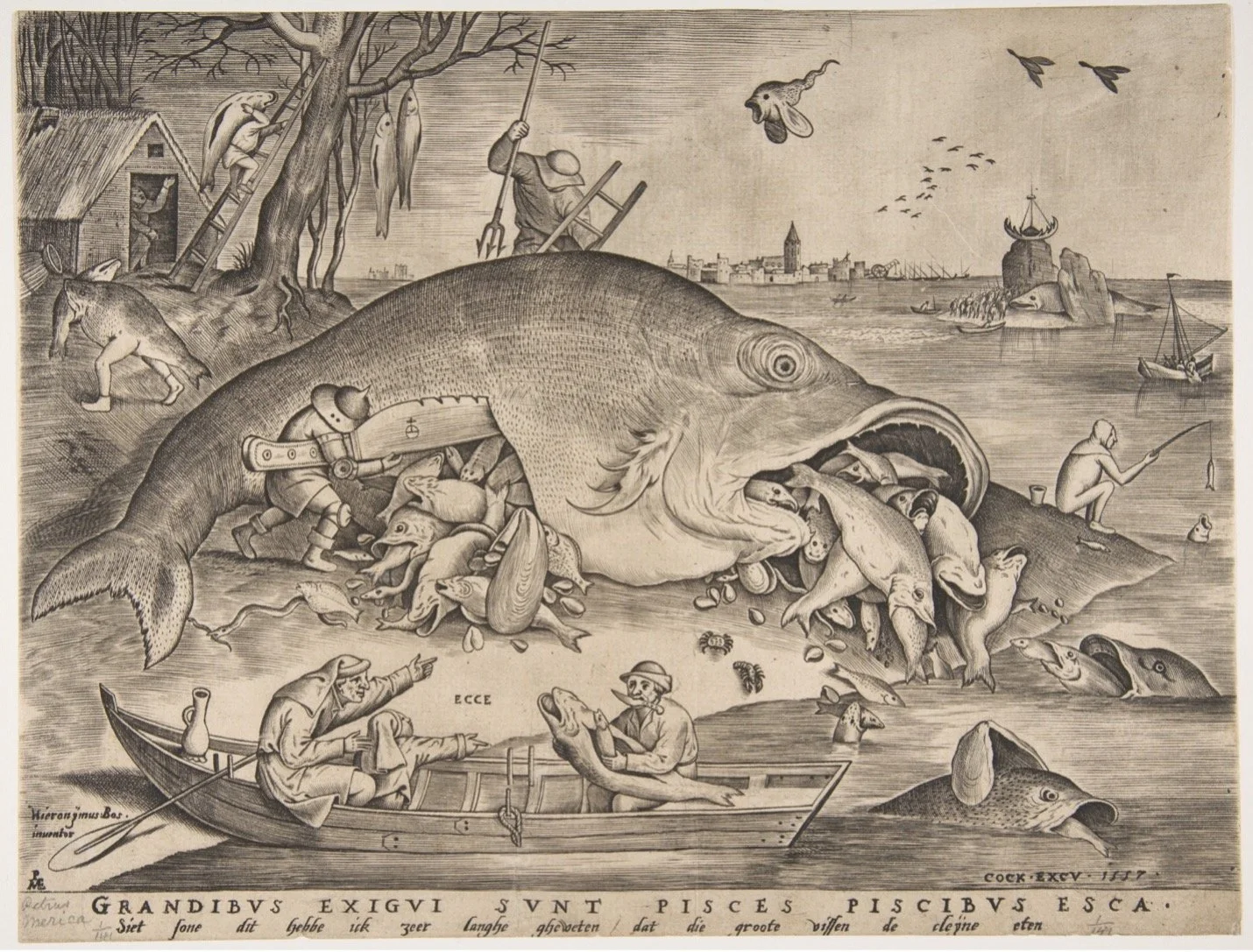
The Big Fish Eat the Small is another bit of social commentary, this time based on a Brueghel print from c. 1556. Brueghel’s engraving is a surreal scene full of fish, swimming in the water, walking on the land, and even flying through the air. Some are gobbling smaller fish, which are gobbling even smaller fish. One enormous fish is being gutted in the center of the scene, and fish (eating fish) are spilling from its open sides. In the foreground, a father gestures to the enormous fish and addresses his son (the words are at the bottom of the engraving): “Look son, I have long known that the big fish eat the small.” Translated into music, this movement is an energetic scherzo, the main theme of which is subjected to augmentation and diminution to represent the multitudes of variously sized fishes.
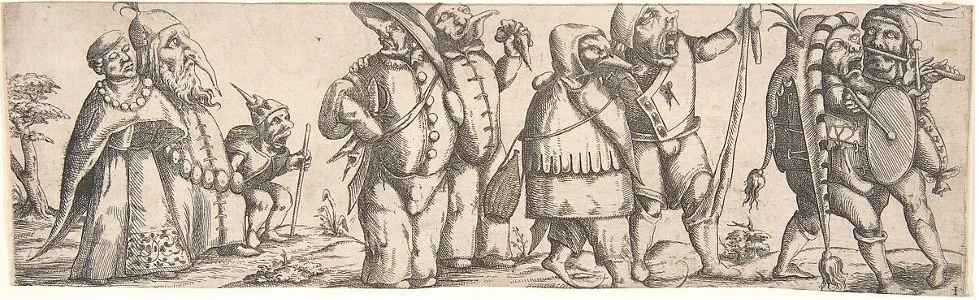
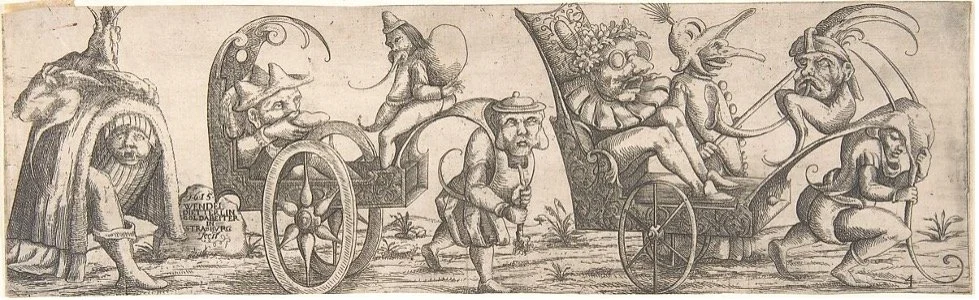
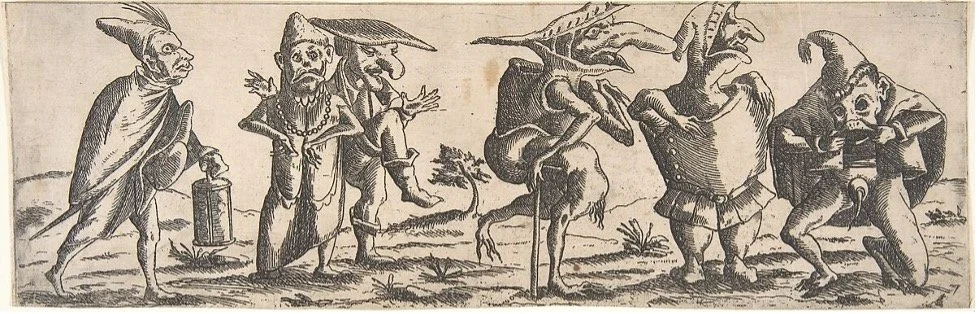
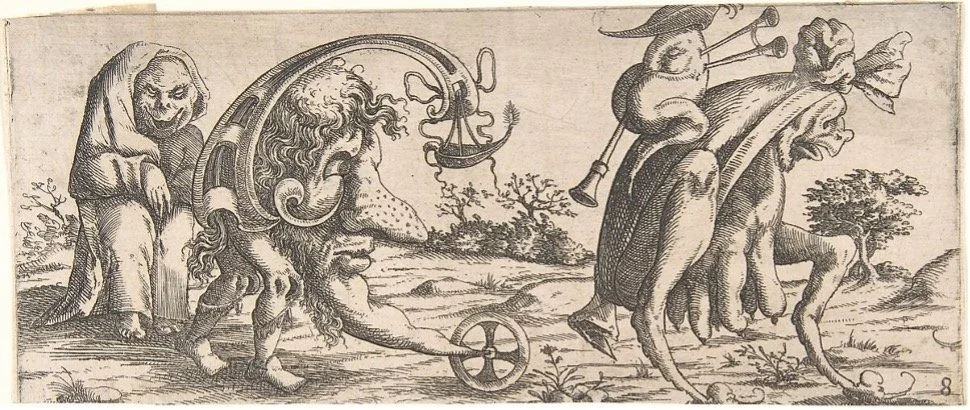
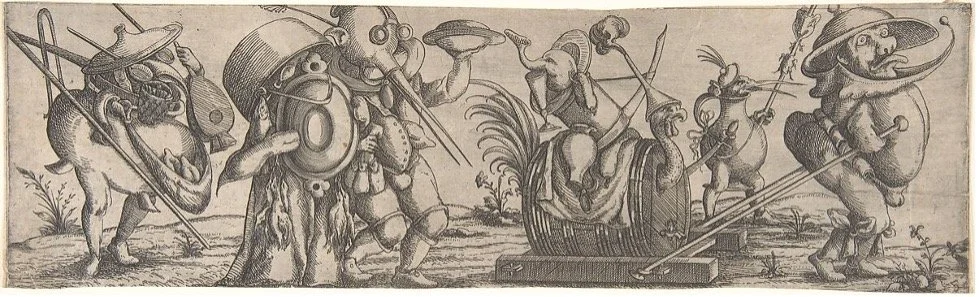
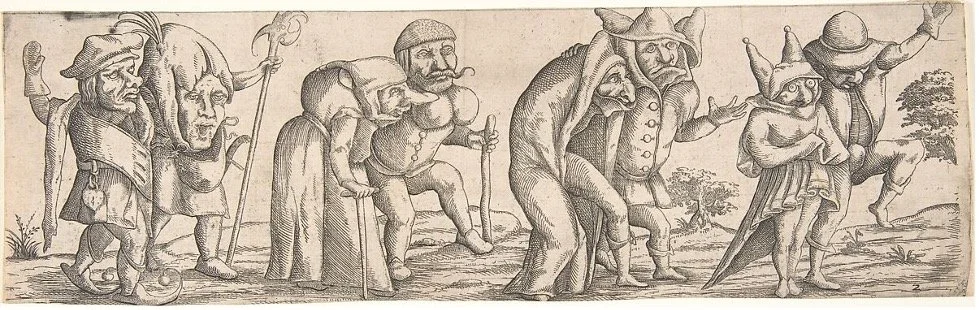
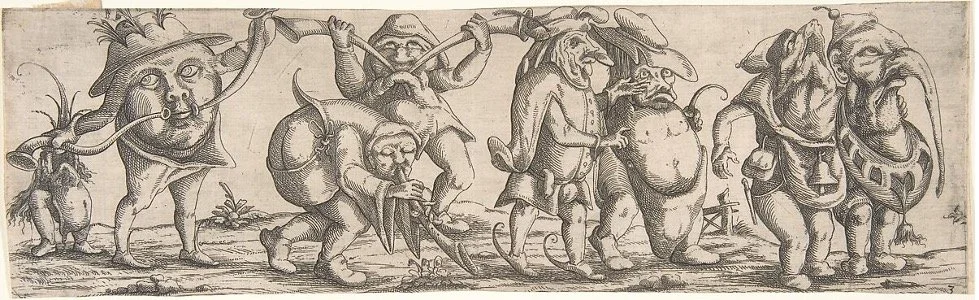
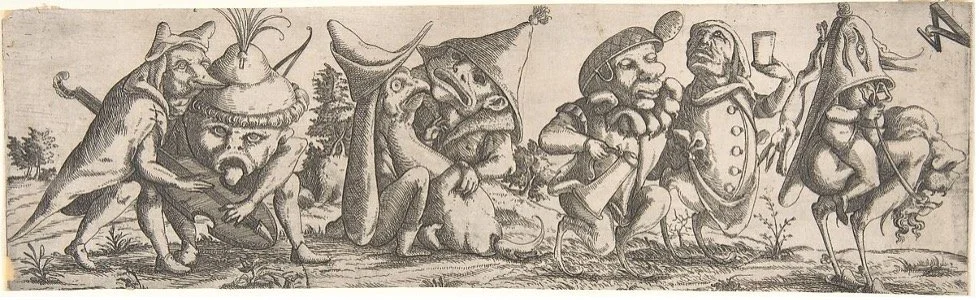
The final movement, Procession of Dream Monsters, was inspired by a series of etchings by Wendell Dietterlin, the Younger, from c. 1617. This work consists of eight panels full of various grotesque and distorted creatures marching along in a mock-serious procession. I saw this work years ago at the Metropolitan Museum of Art and the idea to compose something in response stayed with me. This movement begins with a simple, quiet ostinato, as if the procession is heard from far away. The fool’s song returns in various guises, as does another tune from the Danserye and an earlier medieval Saltarello. Like Dietterlin’s monstrous figures, the tunes are warped and juxtaposed as the procession reaches its chaotic high point. In the end, the music of the Trumpeting Grotesque returns to bring the piece to a crashing conclusion.